
India is currently examining Bangladesh's request for the extradition of former prime minister Sheikh Hasina, who has been living in India since her government's collapse in August 2024, with New Delhi confirming the issue is being processed according to established procedures.

The nearly year-long trial of eight suspects at the International Crimes Tribunal in Bangladesh, who have been accused of war crimes during the 1971 war, may not have made headlines in India, but it is attracting huge international attention and further polarising the country's politics.

Three Islamists from the infamous Al-badr militia were on Monday sentenced to death while five others jailed until death by a special tribunal in Bangladesh for committing crimes against humanity during the 1971 liberation war against Pakistan.

Former Bangladesh cricket captain Shakib Al Hasan's ancestral home was attacked with petrol bombs and smashed windows after he participated in an online media interaction where ousted Prime Minister Sheikh Hasina vowed to return to Bangladesh despite facing a death sentence.
Bangladesh government on Monday pressed war crime charges against fundamentalist Jamaat-e-Islami (JI) leader Ghulam Azam at the International Crimes Tribunal, calling him a "key collaborator" of the then Pakistani regime during the 1971 Liberation War.
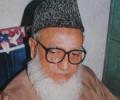
A 91-year-old top leader of the fundamentalist Jamaat-e-Islami was sentenced to 90 years in jail on Monday by a special Bangladeshi tribunal for masterminding atrocities during the 1971 war of independence against Pakistan.

An Indian connection to the war crimes tribunal has emerged, further complicating matters, says RS Chauhan

A former Bangladeshi minister from Jatiya Party was on Sunday indicted by a special court here on 16 war crime charges, including genocide, committed during the country's 1971 liberation war.
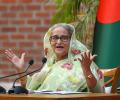
India has acknowledged that it is currently reviewing the Bangladesh government's request for the extradition of former Prime Minister Sheikh Hasina, as part of ongoing judicial and legal processes.

Abdul Quader Mollah, a senior leader of the fundamentalist Jamaat-e-Islami party, was executed on Thursday for genocide during Bangladesh's 1971 liberation war, hours after the Supreme Court rejected his review petition.

Bangladesh's fundamentalist Jamaat-e-Islami chief Motiur Rahman Nizami was on Wednesday sentenced to death by a special tribunal for his role in the killing of thousands of people during the nation's independence war against Pakistan in 1971.
A special Bangladeshi tribunal on Sunday indicted an 89-year-old former chief of fundamentalist outfit Jamaat-e-Islami on 61 charges for committing crimes against humanity during the 1971 Liberation War, months after he was arrested. "The International Crimes Tribunal indicted Professor Ghulam Azam for five types of crimes he committed during the 1971 Liberation War," said prosecuting lawyer Syed Rezaur Rahman.
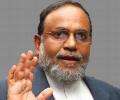
Fundamentalist Jamaat-e-Islami leader and media doyen Mir Quasem Ali was Thursday indicted by a special Bangladeshi tribunal on charges of "crimes against humanity" committed during the 1971 liberation war.

He was convicted of running a militia torture cell, Al Badr, which carried out killings of several people.

Bangladesh on Friday deployed paramilitary border guards to beef up security after a top Islamist opposition leader was sentenced to death, sparking nationwide riots that killed at least 42 people.

Quamruzzaman, an assistant secretary general of Jamaat, is the fourth accused who was convicted for the 1971 war crimes siding with Pakistani troops while his party was opposed to Bangladesh's independence.

A leading British law firm has challenged the fairness and legality of the trial and death sentence handed down to deposed Bangladeshi Prime Minister Sheikh Hasina, citing violations of international law and a politically hostile environment.
A special Bangladeshi tribunal on Monday summoned a Jamaat-e-Islami leader and a "key collaborator" of the then Pakistani junta on charges of committing crimes against humanity during the 1971 Liberation War.
Nizami now faces execution unless his case is reviewed by the court or he is granted clemency by the President.

A prominent lawmaker of the opposition Bangladesh National Party was on Tuesday sentenced to death by a special Bangladeshi tribunal for genocide during the country's 1971 liberation war against Pakistan, becoming the first Member of Parliament and seventh person to be convicted of crimes against humanity.
A top leader of fundamentalist Jamaat-e-Islami party and Bangladeshi media doyen Mir Quasem Ali was sentenced to death on Sunday by a special tribunal for war crimes he committed during the independence war against Pakistan in 1971, days after the party's chief was given capital punishment on identical charges.

73-year-old leader of the Bangladesh's largest Islamist party had refused to seek presidential clemency.

A top leader of the fundamentalist Jamaat-e-Islami party was sentenced to death on Wednesday by a special Bangladeshi tribunal for committing "crimes against humanity" during the country's 1971 liberation war.
Bangladesh's supreme court on Wednesday wrapped up the appeal hearing against the judgment of a special tribunal that had sentenced to death a key 1971 war crimes suspect with the final verdict due any day now.
Bangladesh's supreme court on Wednesday wrapped up the appeal hearing against the judgment of a special tribunal that had sentenced to death a key 1971 war crimes suspect with the final verdict due any day now.
The four-member Appellate Division bench headed by Chief Justice Surendra Kumar Sinha pronounced the single-word judgement at the tense courtroom.

Former Indian envoys criticize the death sentence handed down to ousted Bangladeshi Prime Minister Sheikh Hasina, expressing concerns about political polarization and stability in Bangladesh.
Bangladesh's Supreme Court on Wednesday upheld the death penalty for an influential opposition BNP leader Khaleda Zia for committing crimes against humanity.

A T M Azharul Islam, a top leader of fundamentalist Jamaat-e-Islami party, was sentenced to death on Tuesday by a Bangladeshi special court for committing war crimes during the country's independence war against Pakistan.
Bangladesh's International Crimes Tribunal is set to formally hear charges against deposed prime minister Sheikh Hasina on Sunday allowing state-run BTV to broadcast live the event, a first such instance in the country's history.
Sheikh Hasina, sentenced to death in absentia in Bangladesh, denounces the tribunal as biased and rigged, claiming the verdict reveals the murderous intent of extremist figures within the interim government.

Bangladesh's deposed prime minister Sheikh Hasina was sentenced to death in absentia by a special tribunal for crimes against humanity committed during protests against her government.
Now, in exile in India, Hasina, often dubbed the 'Iron Lady' of Bangladesh, watches from across the border as the nation she helped build, and often ruled with a firm hand, grapples with the legacy her rise and fall has left behind.
A top leader of Bangladesh's fundamentalist Jamaat-e-Islami party was on Thursday sentenced to death for "crimes against humanity", including genocide and religious persecution, during the country's 1971 war of independence against Pakistan.

Bangladesh was on the boil on Thursday as at least 23 people, including three policemen, were killed and scores injured in violence after a death sentence was handed down to a top leader of the fundamentalist Jamaat-e-Islami for "crimes against humanity" during the 1971 liberation war.

Tarique Rahman is Bangladesh's first male prime minister in more than three decades, ending an era of female leadership that began in 1991.
The chairman of a special Bangladeshi tribunal trying high-profile 1971 "war criminals" resigned on Tuesday following a controversy over his reported Skype conversation with an expatriate war crimes expert.

'While I would never wish for anyone to go through what we are, it has brought out the best in us by making each one of us a better version of ourselves.' 'Being courageous, fighting for freedom, taking the burden of responsibility to help each other...' 'I know hundreds and hundreds of examples where Ukrainians are risking their lives for complete strangers and it is only in moments like this that we truly understand what it means to be human.'

Bangladesh police have filed a case against deposed prime minister Sheikh Hasina and 72 others on charges of hatching a conspiracy to overthrow the interim government led by Muhammad Yunus by waging a civil war, officials and media reports said on Saturday.
A court in Bangladesh has issued fresh arrest warrants against former Prime Minister Sheikh Hasina, her son Sajeeb Wajed, and 16 others in two cases related to alleged irregularities in allocating residential plots on the outskirts of the capital. The warrants were issued based on chargesheets filed by the Anti Corruption Commission (ACC), which alleges that Hasina and her family members illegally acquired plots in Purbachal New Town by abusing state power. The court has ordered police to submit a report by April 29 on the progress of executing the warrants. This is the latest in a series of legal actions against Hasina and her family members since her Awami League regime was toppled last year in a student-led mass uprising.
